Where Should a Jobsite Hand-Wash Station Go?
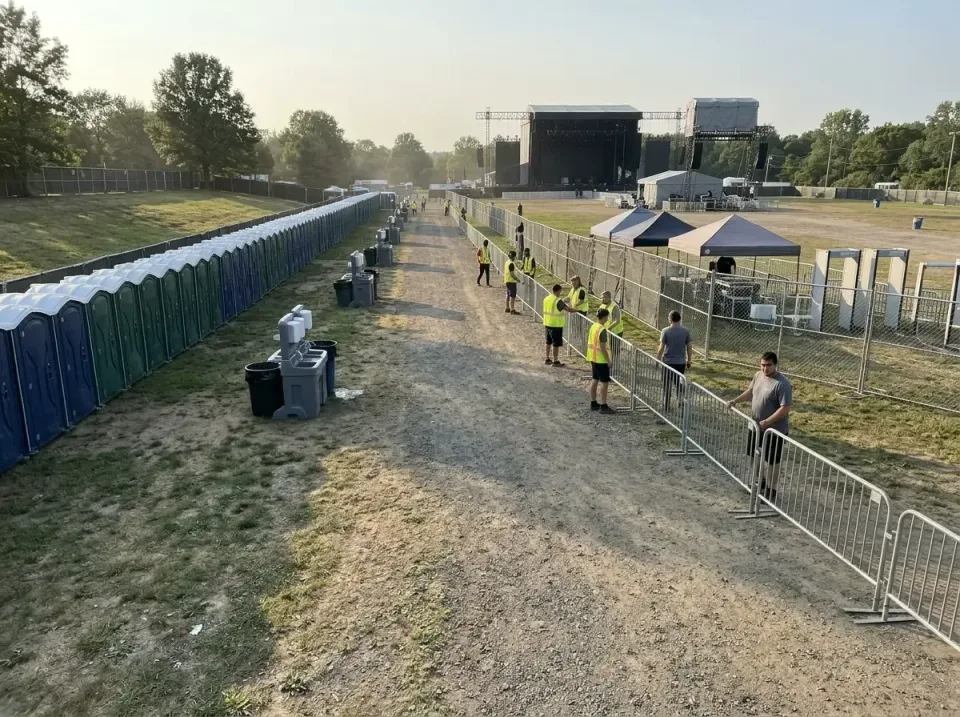
When handwashing is unavailable near the work area, crews may skip the walk to a distant sink or track dirt back to tools and materials. Place the station beside the portable toilet and on a stable route workers can reach without crossing vehicle traffic.
Near Campbell Elementary School, a crew working around school access should keep the station and its approach clear of pedestrian paths and entrances. At Columbine Park, event or maintenance crews should choose a spot that stays convenient without blocking public circulation.
A job near Colorado State Highway 14 also needs a drop-off location that a delivery vehicle can reach safely. Before confirming placement, check the walking path, ground firmness, and room for servicing.
Keep the sink beside the work zone
A hand-wash station works best where people finish using the toilet or handle dirty tools not across a parking area or behind stored materials. Keep it close enough to make washing an easy next step, but outside equipment routes, excavation edges, and the path of moving vehicles.
Separate the station from dust, splash, and debris where the site allows. Convenience matters. If workers must detour around a machine or climb over supplies, they may skip the sink.
In Sterling’s high-plains, semi-arid continental climate, a station exposed to sun and wind can need attention sooner than one in a protected, accessible spot. We ask crews to consider shelter, safe footing, and a clear route between the unit and the active work area. A hand-wash station rental can address the gap when the nearest building sink is too far away; it should not create a new obstacle.
Can the delivery truck reach the chosen spot?
A placement plan needs to work for both users and the service truck. Check the route from the entrance to the drop-off location, including turning room and any surface that could trap or tilt a vehicle.
Snow and ice can delay delivery vehicles, so an obstructed approach or a last-minute change to site access can disrupt the planned window. Keep the truck’s route clear after delivery as well, so routine service does not require moving materials or equipment.
Sterling City Hall can be a useful reference point when coordinating work in town, but the crew still needs the actual jobsite entrance and an on-site contact. For projects reached by U.S.
Highway 138, share access instructions and gate details before scheduling. We confirm the delivery address, site contact, placement area, and pickup window with the customer rather than asking a driver to guess at arrival.
Set the service interval for actual use
A hand-wash station’s location and supply plan should reflect how many people use it and how often they wash. Construction crews may need weekly service, with more frequent attention considered when use is heavier or site conditions call for it.
A station placed beside the main work area may see much more use than one near a rarely used entrance. Keep access clear for replenishment and service; don’t box the unit in with pallets or temporary fencing.
Work near Sterling Municipal Airport may involve controlled access or a specific site contact, so include those instructions in the delivery plan. The nearby Hagen Early Education Center is another reminder to account for people who are not part of the crew when a job sits near a busy public setting.
Protect pedestrian movement and avoid placing the station where its use could block an entrance. Ask us to discuss expected occupancy and service frequency before the first delivery.
When should you handle placement yourself?
A site supervisor can usually choose a location when the ground is stable, the route is clear, and the station can sit beside the work area without interfering with traffic or access. Mark the intended spot and show it to the delivery driver or site contact. The step people often miss is leaving a clear service approach after equipment and materials arrive.
Bring in our crew to coordinate placement when the delivery route is tight, access changes by shift, or several crews share the space. We can review truck access and the planned drop-off location with you before scheduling, then coordinate delivery and servicing.
For related planning, read our guide to Construction Site Toilet Rental. If portable restroom access is also a concern on a remote project, see When Should a Rural Sterling Jobsite Add a Standard Porta Potty?.
Compare Hand-Washing and Restroom Options
Choose based on what the crew needs at the point of use: a nearby wash sink, a toilet, or several fixtures for a larger setup. A station beside the restroom can reduce unnecessary walking, but it should not narrow a required access route.
The Logan County Courthouse is a helpful downtown reference when discussing a Sterling delivery address; the actual jobsite entrance still determines truck approach. Projects near the Overland Trail Museum may need a placement plan that accounts for visitor movement.
Rapid temperature swings between day and night also make it sensible to ask how exposed equipment will be managed.
| Option | Best for | Key detail |
|---|---|---|
| Portable hand-wash station | Washing near active work | Freshwater supply; place beside, not in, traffic flow |
| Standard porta potty | One nearby restroom | Single-occupant enclosure; pair with a separate sink |
| ADA-compliant portable toilet | Accessible restroom access | Larger access footprint; preserve the accessible approach |
| Restroom trailer | Multiple users and fixtures | Multiple-stall configurations; needs suitable truck access |
How Do You Prepare a Jobsite Wash Station?
Start with the workers’ route from the restroom or task area to the sink, then check the site conditions that could make the selected location difficult to use. Plan for servicing, not just the first drop-off.
-
Confirm the contact: Give the delivery crew the job address, site contact, gate instructions, and delivery and pickup windows.
-
Choose firm ground: Select a level area with a stable walking approach; heavy rain can leave a planned spot muddy.
-
Protect the route: Keep service-truck access and turnaround space clear of equipment, stored supplies, and vehicle paths.
-
Check utilities: Identify underground utilities before placement, and avoid moving the unit later without checking the new spot.
-
Plan winter use: Subfreezing nights can freeze water lines, so discuss protection before cold weather arrives.
At the South Platte River, changing ground conditions can make a previously convenient spot less practical, so reassess after weather shifts. Nearby Sterling Correctional Facility or Sterling Country Club are location references, not substitutes for the site’s access instructions. Summer rainfall is limited and variable; don’t assume an exposed station will have a naturally dependable water source.
Plan a Reliable Jobsite Hand-Wash Location
The practical rule is simple: put the station close to the work, on stable ground, with a clear approach for users and the service vehicle. In Sterling, heavy rain can turn a chosen placement area muddy, while freeze-thaw cycles may soften an access route; check the ground again when conditions change.
Low humidity can increase handwashing-water demand, so plan supply and servicing around use rather than assuming one fill will last. At Ayres Elementary School, nearby access needs should be considered before selecting a spot.
For a site exposed to cold, windy winter conditions, discuss protecting plumbing. Contact Colorado Toilet Pros at (844) 402-2049 to coordinate a Hand Wash Station Rental and review the jobsite location.